

Dec 19th 2025
10 Grapples That Make Tree and Brush Cleanup Easier
Clearing land presents a massive challenge for property owners and contractors alike. Overgrown vegetation, fallen trees, and stubborn underbrush require significant effort to remove. Manual labor takes too long and puts unnecessary physical strain on your crew. Skid steers offer a powerful solution, but the machine is only as effective as the attachment on the front. Using the correct grapple attachment turns a difficult project into a manageable task.
Operators need attachments that bite, hold, and lift with precision. The right tool minimizes the number of passes required to clear an area and ensures safety while handling heavy loads. Here are the specific features and types of grapples that make tree and brush cleanup easier for operators of all skill levels.
Root Grapples Allow Dirt To Sift Through
Root grapples function as the primary workhorse for land clearing. These attachments feature a skeletal design with tines spaced apart. This spacing serves a critical purpose during operation. When you scoop up a pile of brush or dig out a root ball, the open bottom allows loose dirt, sand, and small rocks to fall back to the ground. This capability preserves your topsoil and reduces the weight of the load you transport.
Operators prefer root grapples because they leave the land cleaner. You don’t want to create massive piles of brush mixed with heavy mounds of dirt. Dirt-heavy piles are harder to burn and more expensive to haul away. The tine spacing on a root grapple ensures you only move the vegetation you intend to clear. Heavy-duty tines also allow you to dig beneath roots to pry them from the soil effectively.
Grapple Rakes Gather Loose Debris Quickly
Grapple rakes combine the lifting power of a grapple with the gathering ability of a landscape rake. The shape of the tines usually curves forward and down, resembling a large hand. This design excels at rolling brush and gathering loose limbs scattered across a wide area. You can lower the grapple rake to the ground and drive forward to sweep up debris efficiently.
Once you accumulate a full load, the upper jaw clamps down to secure the material for transport. Grapple rakes work exceptionally well for the final cleanup phase. After you remove the large trees and heavy stumps, a grapple rake cleans up the remaining branches and sticks that clutter the ground. This tool leaves a smooth finish and prepares the soil for mowing or seeding.
Solid Bottom Grapple Buckets Handle Small Chips
Sometimes you need to move material that is too fine for a skeleton-style grapple. Solid bottom grapple buckets feature a standard bucket floor with a grapple arm assembly on top. These attachments shine when you need to clean up sawdust, wood chips, small rocks, or loose gravel. A root grapple would let this fine material fall right through, but a solid bottom bucket captures everything.
This versatility makes the solid bottom grapple an excellent choice for demolition work or storm cleanup where debris sizes vary wildly. You can scoop up a load of wet leaves and broken branches without leaving a trail of mess behind you. While they do not sift dirt, their ability to contain messy, loose material makes them an essential tool for complete site cleanup.
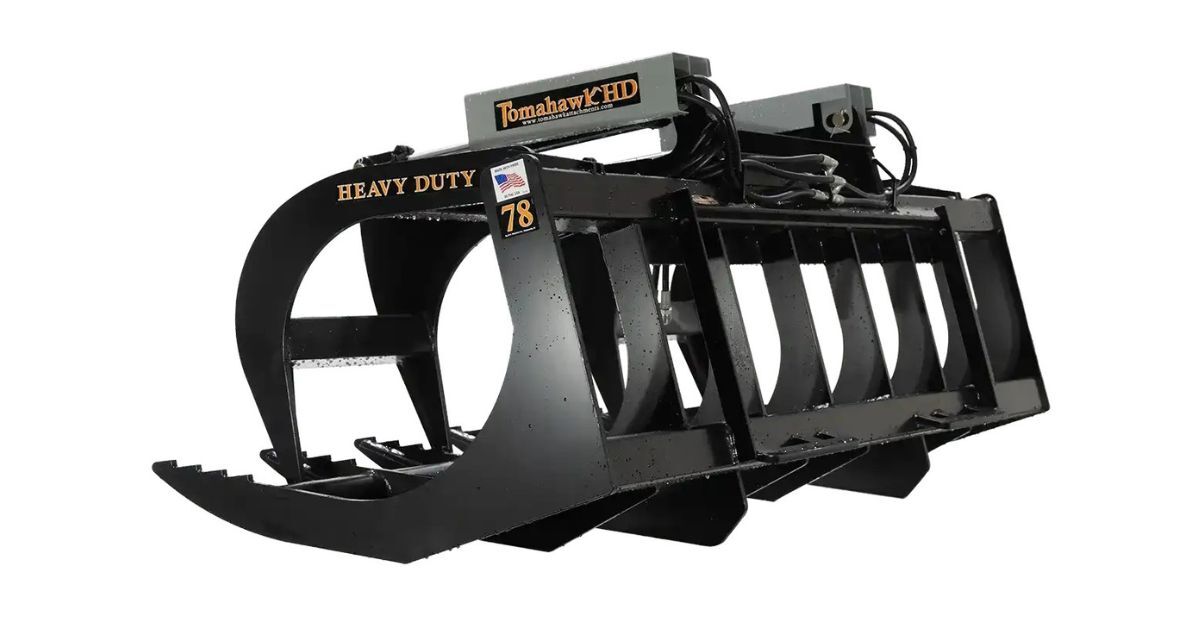
Stump Grapples Remove Embedded Roots
Standard grapples sometimes struggle with the sheer force required to pop a large stump out of the ground. Stump grapples feature a narrow design that concentrates the breakout force of your skid steer into a smaller area. This focused power allows the attachment to slice through roots and dig deep under the stump base.
The design typically looks like a long, narrow beak. It allows operators to pry stubborn stumps and large rocks from the earth with less machine effort than a wide bucket would require. Once you dislodge the stump, the upper jaw secures it for removal. This specialized tool prevents you from damaging a wider bucket when tackling deeply embedded hardwoods or large rocks.
Log Jaw Grapples Secure Large Timber
Forestry work often involves moving long, heavy tree trunks. Standard construction grapples can struggle to grip a single large log securely. Log jaw grapples utilize a design specifically optimized for timber. The tines curve to wrap around the cylindrical shape of a log, and the clamping force ensures the wood does not slide out during transport.
These grapples often feature a bypass clamp design where the jaws overlap. This allows the grapple to close tightly around even narrow logs. Securing the load prevents dangerous slips while moving timber across uneven terrain. For operations that focus primarily on logging or processing firewood, a log jaw grapple offers superior safety and efficiency compared to general-purpose brush grapples.
Industrial Grapples Handle Heavy Commercial Work
Commercial land clearing demands equipment that withstands constant abuse. Industrial grapples feature thicker steel plating, reinforced hinges, and larger hydraulic cylinders than standard utility models. Manufacturers build these attachments to endure the high stress of tearing down structures or clearing dense forests day after day.
Investing in an industrial-grade unit ensures longevity. The reinforced tines resist bending when prying up concrete or twisting heavy oak trees. While the initial investment is higher, the durability reduces downtime caused by repairs. For contractors running high-horsepower skid steers, industrial grapples provide the structural integrity necessary to match the power of the machine.
Dual Cylinder Designs Secure Uneven Loads
Brush piles rarely form perfect, even shapes. You often grab a load that is thick on one side and thin on the other. Single-cylinder grapples often struggle here, as the jaw only closes as far as the highest point of the pile. This leaves the loose side of the load unsecured and prone to falling out.
Dual-cylinder designs feature two independent hydraulic cylinders operating separate upper jaws. Each jaw closes independently until it makes contact with the load. One side can clamp down on a large stump while the other side clamps down on a bundle of branches. This independent action ensures the entire load stays secure, regardless of how uneven the debris pile is. This feature dramatically improves safety and efficiency when moving awkward brush piles.
Open Sided Grapples Manage Longer Limbs
The side panels on a bucket provide structural strength but limit the length of the material you can carry. If a log is wider than the bucket, it rests on the side edges, which can be unstable. Open-sided grapples eliminate this restriction. The sides of the attachment are cut away or minimized, allowing logs and long branches to stick out well past the width of the grapple.
This design proves invaluable when clearing fallen trees. You can grab a 20-foot trunk in the center and balance it securely without the bucket sides interfering. It allows a smaller grapple to handle material much larger than its physical footprint. For tree service professionals, the open-sided design is a must-have feature for managing long timber.
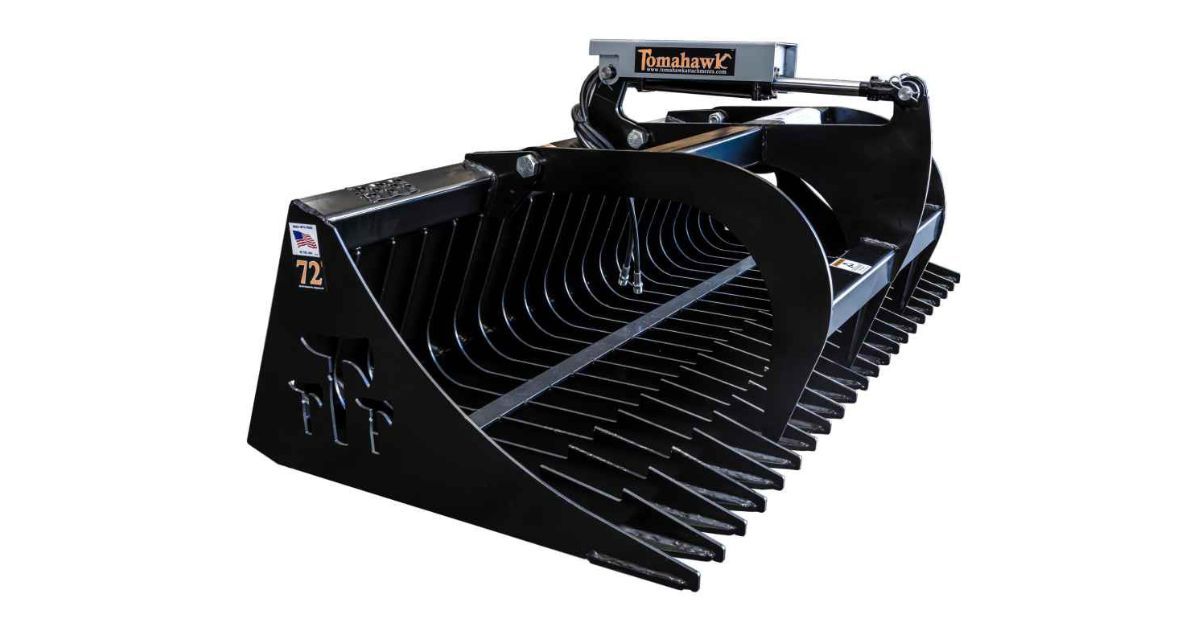
High Strength Steel Tines Resist Bending
The material composition of a grapple dictates its lifespan. Manufacturers construct high-quality grapples from high-tensile steel, often graded as Grade 50 or AR400. This steel provides exceptional resistance to bending and wear. When you push a grapple into the dirt to pry up a root, the tines endure immense leverage forces.
Lower-quality steel bends under this pressure, ruining the alignment of the jaws. High-strength steel springs back or resists deformation entirely. Additionally, abrasion-resistant (AR) steel handles the constant friction of digging in sandy or rocky soil without wearing down prematurely. Checking the steel grade ensures you select grapples that make tree and brush cleanup easier for years rather than just a few seasons.
Quick Attach Systems Speed Up The Job
Versatility defines the modern skid steer, and the universal quick attach system enables that versatility. A high-quality grapple must feature a mount plate that fits securely and easily onto your machine. The ability to switch from a grapple rake to a stump bucket in under a minute keeps your project moving.
A standardized quick attach plate ensures compatibility across different brands of skid steers. This interchangeability adds value to your fleet, allowing you to share attachments between different machines. Furthermore, easily accessible hydraulic couplers allow for fast connections without leaking fluid. Efficient connection systems minimize downtime and keep operators in the cab working rather than struggling with pins and hoses.
Improve Your Cleanup Efficiency
Land clearing requires the right strategy and the right equipment. Attempting to clear dense brush with a standard dirt bucket wastes time and frustrates operators. Specialized tools allow you to grab, lift, and sift material with purpose. Whether you need to dig out stumps, rake up small sticks, or haul massive logs, a specific attachment exists to handle the job.
Selecting the proper width, style, and strength rating for your machine ensures maximum productivity. Consider the specific vegetation you manage most often. A root grapple serves general needs well, while a stump bucket tackles specific removal tasks. Investing in high-quality brush grapple for skid steer attachments ensures you get the job done right the first time.